
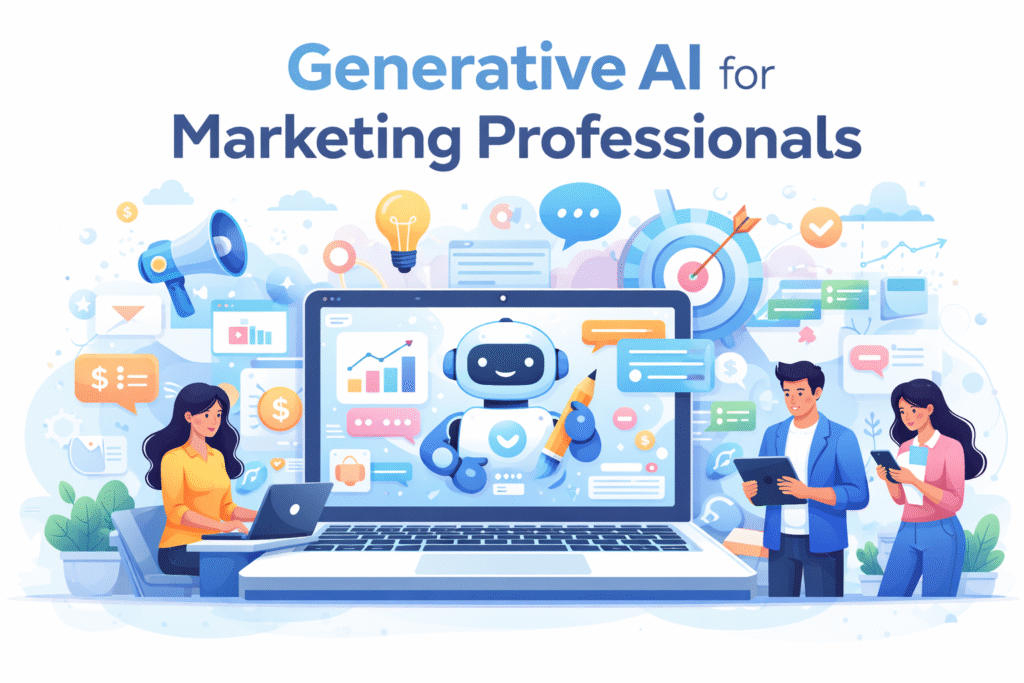
Generative AI for Marketing Professionals: Use Cases & Tools
Generative AI for Marketing Professionals has rapidly become one of the most important skill areas in modern digital marketing. As marketing channels grow more competitive and data-driven, professionals are expected to work faster, personalize campaigns, and deliver measurable results. Generative AI helps marketers achieve these goals by automating content creation, optimizing campaigns, and enhancing customer engagement. This blog explains how generative AI is used in marketing, the most important use cases, essential AI tools for digital marketers, career impact, and why mastering generative AI is critical for marketing professionals in 2026. Understanding Generative AI in Marketing Generative AI refers to artificial intelligence systems that can create content such as text, images, videos, audio, and data-driven insights. In marketing, generative AI supports creativity while improving efficiency and scalability. Instead of replacing marketers, generative AI acts as an assistant that enhances productivity, reduces repetitive work, and supports smarter decision-making. Evolution of Digital Marketing with AI Traditional digital marketing relied heavily on manual content creation, basic automation, and historical data analysis. Generative AI has transformed this approach by introducing predictive intelligence, personalization at scale, and real-time optimization. Modern marketing teams now use AI not only for execution but also for strategy planning and performance forecasting. Why Generative AI Matters for Marketing Professionals Generative AI matters because it enables marketers to: Create high-quality content faster Personalize campaigns across multiple channels Analyze large datasets efficiently Improve ROI through predictive insights Scale marketing efforts without increasing costs Marketing professionals who understand AI tools gain a strong competitive advantage. Core Use Cases of Generative AI in Marketing Generative AI is applied across nearly every area of digital marketing. Understanding these use cases is essential for professionals. Generative AI in Content Creation One of the most common applications of generative AI is content creation. Marketers use AI to: Generate blog drafts and outlines Write ad copy and landing page content Create product descriptions Rewrite content for different platforms AI speeds up the content workflow while maintaining consistency and relevance. AI for SEO and Content Optimization Generative AI helps optimize content for search engines by analyzing keywords, search intent, and competition. Marketers use AI to: Generate SEO-friendly content structures Improve readability and engagement Optimize titles and meta descriptions Identify content gaps This improves organic visibility and long-term ranking potential. Generative AI in Social Media Marketing Managing social media across platforms is time-consuming. Generative AI simplifies this by: Creating captions and post ideas Adapting content for different platforms Suggesting optimal posting times Analyzing engagement trends Social media marketers benefit from faster execution and better consistency. AI in Paid Advertising Campaigns Generative AI improves paid advertising by supporting: Ad copy generation Creative variations for A/B testing Audience targeting insights Budget optimization suggestions This leads to higher conversion rates and better ad performance. Generative AI for Email Marketing Email marketing becomes more effective with AI-driven personalization. Marketers use generative AI to: Write personalized email content Generate subject line variations Build automated email sequences Predict engagement behavior AI helps deliver the right message at the right time. Conversational AI and Chatbots Generative AI powers chatbots that interact with customers in real time. These chatbots help: Answer customer questions Capture leads Guide users through purchase journeys Improve customer satisfaction This is especially valuable for e-commerce and service-based businesses. AI for Marketing Automation Automation is a core benefit of generative AI. Marketers use AI to automate: Campaign workflows Lead nurturing processes Customer segmentation Performance reporting This reduces manual workload and improves efficiency. Generative AI in Analytics and Reporting Generative AI assists marketers in analyzing complex data by: Summarizing campaign performance Identifying trends and patterns Predicting future outcomes Supporting data-driven decisions This allows marketing professionals to focus on strategy instead of manual reporting. AI Tools for Digital Marketers Understanding AI Tools for Digital Marketers is a key part of modern marketing education. These tools cover multiple functions. Content Generation Tools AI content tools help with writing, editing, and ideation. They are widely used for blogs, ads, and social media. SEO and Optimization Tools AI-powered SEO tools assist with keyword research, content optimization, and ranking analysis. Design and Creative Tools Generative AI tools now create images, videos, and visual assets that support branding and advertising. Marketing Automation Platforms These tools integrate AI into CRM systems, email platforms, and campaign management software. Analytics and Insight Tools AI analytics platforms help interpret data and predict campaign performance. Skills Marketing Professionals Gain from Generative AI By learning generative AI, marketing professionals develop: AI-assisted content creation skills Strategic campaign planning abilities Data interpretation and analysis skills Automation management expertise Ethical AI usage awareness These skills are highly valued across industries. Career Benefits for Marketing Professionals Professionals with generative AI expertise can pursue roles such as: AI Marketing Specialist Digital Marketing Strategist Content Marketing Manager Marketing Automation Consultant Growth Marketing Analyst Employers increasingly prioritize AI-ready marketers. Salary Trends and Industry Demand (2026) Marketing professionals skilled in AI often earn higher salaries due to their ability to manage complex campaigns efficiently. Demand for AI-literate marketers is expected to grow significantly in 2026 and beyond. Challenges of Using Generative AI in Marketing Despite its benefits, generative AI presents challenges such as: Maintaining originality Avoiding over-automation Managing ethical concerns Ensuring data privacy Professional training emphasizes responsible and balanced AI usage. Ethical Considerations in AI Marketing Ethical marketing with AI includes: Transparency in AI usage Respect for user privacy Avoiding misleading content Human oversight in decision-making These principles ensure long-term trust and compliance. Future of Generative AI in Marketing The future of marketing will involve deeper AI integration, smarter personalization, and predictive campaign management. Marketing professionals who adapt early will remain competitive and relevant. Choosing the Right AI Training Path Marketing professionals should choose learning paths that offer: Practical AI tool training Real-world case studies Hands-on projects Updated curriculum aligned with industry needs Real-World Applications of Generative AI Businesses use generative AI to: Scale content marketing Improve customer engagement Optimize advertising spend Enhance brand communication These applications highlight the real value of AI in marketing.
Generative AI for Marketing Professionals: Use Cases & Tools Read More »